

Animated Face Expressions: Giving AI a Soul
04/01/2026 • 00:03:00
Project Reference
This article relates to a project in our portfolio.
Giving AI a Soul: The Expression Engine
Executive Summary: A deep dive into the AI Bot Control Center, a modular animation framework designed to give Large Language Models (LLMs) a physical presence through reactive, parameter-driven facial expressions.
Let’s face it: chatting with a white text box can feel a bit... robotic. As AI becomes more integrated into our daily lives, the "Uncanny Valley" isn't our only enemy—static interfaces are. At the intersection of Web Animation and Human-Computer Interaction (HCI), we are building a bridge. This demo explores how simple CSS transforms and state management can turn a group of <div> elements into a living, breathing digital companion.
The Philosophy of "Reactive UI"
Most AI interfaces are reactive in text only. Our goal was to create a character that listens, thinks, and reacts in real-time. By utilizing a parameter-based design, the character doesn't just switch between "Happy" and "Sad"; it transitions through states, allowing for a nuanced performance that matches the "vibe" of an LLM's output.
"If an AI can reason like a human, it should be able to eye-roll like one too." — Dev Notes
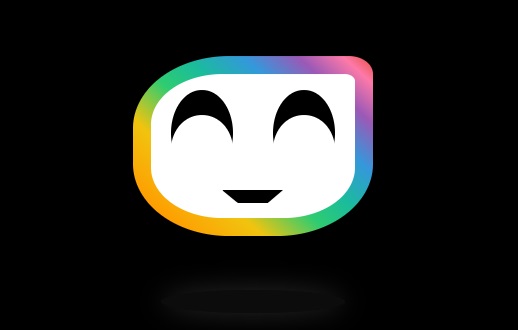
The Mechanics: How the Bot "Feels"
The AI Bot Control Center isn't just a collection of sprites. It’s a sophisticated hierarchy of nested containers and CSS transitions.
1. The Modular Face Construction
Instead of using heavy video files or complex 3D rigs, the bot is built entirely using lightweight HTML and CSS.
- The Outer Shell: Handles "Body Language" like nodding, shaking, and "breathing" idles.
- The Eyes: Independent containers for the left and right eye allow for winking, squinting, and directional looking.
- The Mouth: A dynamic shape-shifter that toggles between "Talk" states to simulate phonetic movement.
2. State-Based Animation Logic
The character operates on a "State Machine" logic. When the user triggers a "Thinking" state, the engine doesn't just play a loop—it adjusts the eye-positioning and body-sway to mimic cognitive load.
| State | CSS Transformation | Psychological Effect |
|---|---|---|
| Thinking | Upward eye-tilt + subtle jitter | Conveys "Processing" |
| Listening | Slight head tilt + wide pupils | Conveys "Attention" |
| Laughing | Rapid Y-axis oscillation | Conveys "Joy/Connection" |
| Sighing | Slow downward scale + eye-close | Conveys "Frustration/Relief" |
3. The Performance Metrics
Because this is built for the web, performance is king. Unlike traditional 3D avatars, this CSS engine has a near-zero footprint.
- Asset Weight: < 10KB (Code-based, no external textures).
- Frame Rate: Silky smooth 60fps, even on low-end mobile devices.
- Scalability: Fully SVG/CSS-driven, meaning it looks crisp on a 4K monitor or a smartwatch.
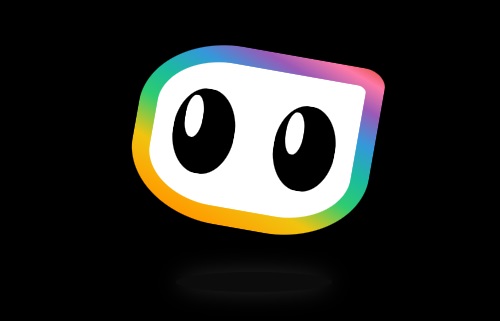
Bringing the LLM to Life
The ultimate vision for this demo is a direct "Brain-to-Face" pipeline. Imagine an API call where the LLM sentiment analysis dictates the CSS class:
- Input: "I'm sorry, I can't find that file."
- Sentiment: Regret / Helpfulness.
- Trigger:
ai_bot_sad()+ai_bot_look_down().
By mapping the "hidden states" of a transformer model to the visual states of our character, we create a more empathetic user experience.
What’s Next?
We are currently experimenting with Audio-Reactive Lip Sync, where the talk states are triggered by the frequency levels of a Text-to-Speech (TTS) stream. Soon, your AI won't just be a smart assistant—it'll be a digital friend with a personality you can actually see.
Project Reference
This article relates to a project in our portfolio.